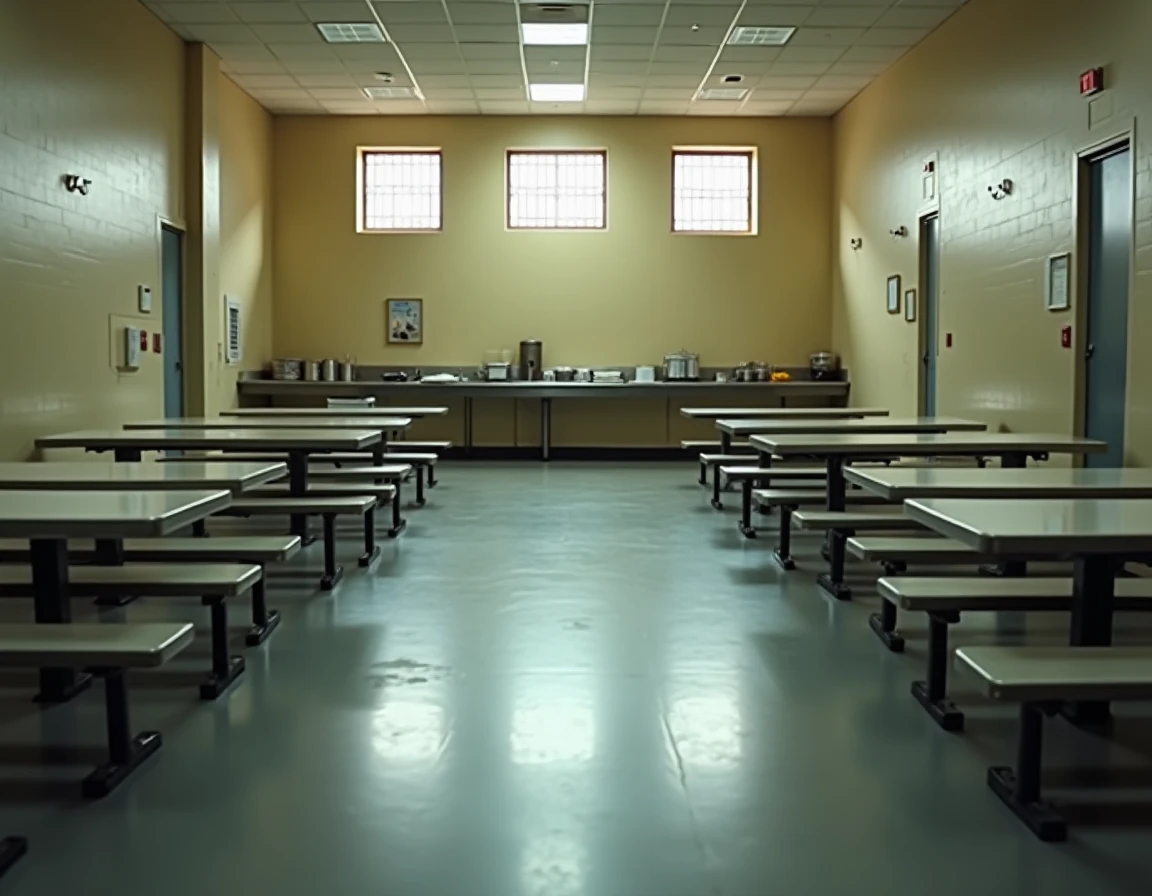
The prison canteen refers to the remote purchasing system through which incarcerated individuals can acquire products in addition to what the administration provides for free. The prices of canteens in prison, their pricing methods, and the rights governing access to these products are increasingly contentious, exacerbated by inflation and recent legal decisions.
Differentiated pricing between establishments: what the Council of State has ruled
On October 3, 2025, the Council of State issued a ruling that now structures the entire pricing issue. The case involved an inmate from the Valence prison (a delegated management facility) against the Ministry of Justice. The applicant invoked the principle of equality and Article 14 of the ECHR combined with Protocol 1-1.
The Council of State validated the principle of differentiated pricing from one establishment to another. The condition set: that prices remain in relation to actual costs and that the disparity between establishments is not manifestly disproportionate. The national framework agreement applicable to prisons under direct management does not apply to establishments under delegated management.
In practice, this means that the same product can cost significantly more in a prison managed by a private contractor than in a facility under direct management. To better understand the prices of prison canteens in 2026, it is essential to distinguish between these two management modes, as they directly determine the level of applied rates.
Delegated management or direct management: why canteen prices vary so much

French penitentiary establishments operate under two models. In direct management, the prison administration manages the supply and distribution of canteen products itself. Prices are regulated by a national framework agreement.
In delegated management, a private contractor handles logistics. It sets its prices within the framework of the public contract binding it to the state, but is not subject to the framework agreement of direct management. The contractor incorporates its operating costs, transportation, and profit margin into the final price.
This structural difference explains sometimes notable discrepancies in common products: food, personal hygiene, tobacco. An inmate transferred from a facility under direct management to a prison under delegated management may notice a significant increase in their monthly expenses for an identical basket of goods.
What the administration provides for free
The prison administration ensures a minimal baseline: accommodation, daily meals, basic hygiene kit, and access to healthcare. Everything else falls under the canteen. Additional food products, hygiene items beyond the basic kit, clothing, writing materials, television rentals: the list of expenses borne by the inmate quickly grows.
According to the International Observatory of Prisons (OIP), the cost of living in prison amounts to at least 200 euros per month for an inmate wishing to live in decent conditions. This amount covers the canteen, television rental, phone, and hygiene products not provided.
Precarity in detention: who pays when the inmate has nothing
The OIP reminds us that more than one in four inmates is without resources. No money sent by family, no work in detention, no savings. These individuals are entirely dependent on what the administration provides for free, which is the bare minimum.
In 2022, of all individuals who had been incarcerated at least once during the year, 88.1% had ordered at least one product from the canteen. This high figure masks very disparate realities. Some inmates only spend a few euros per month on basic hygiene products, while others spend much higher amounts.
- Work in detention, when accessible, often pays at very low levels, limiting purchasing power in the canteen.
- Family remittances are the main source of funding for many inmates, but they depend on the financial situation of their relatives.
- The assistance provided by the administration to the most disadvantaged inmates remains symbolic compared to the actual cost of canteen products.
Incarceration costs: the 2025-2026 debate on what remains free
In April 2025, Justice Minister Gérald Darmanin reignited the debate by proposing that inmates contribute to the costs of incarceration. The idea: a contribution to the public service of Justice, deducted from the inmate’s available resources.
The OIP condemned this proposal, reminding that the lives of inmates are already marked “by the seal of precarity.” The question posed by Franceinfo on April 29, 2025, “Is everything currently free in prison for inmates?” illustrates the shift in the debate. The canteen is no longer the only issue: the entire scope of free versus paid services is being questioned.
Quality and logistics under pressure
Beyond prices, testimonies from the field reported in 2026 highlight concrete problems: quantities deemed insufficient, failure to respect the cold chain, prices described as “exorbitant.” These reports converge towards a conclusion: the issue of the canteen now intertwines price, quality, and sanitary conditions.
The subject has also taken on a European dimension. Euronews published in May 2026 a state of play on hunger and overcrowding in European prisons, placing the conditions of French prison life in a broader comparative perspective.
Inmates’ rights regarding canteen prices: possible recourse
An inmate who considers canteen prices excessive has avenues for recourse. The Council of State’s decision from October 2025 clarified the framework: differentiated pricing is legal, but it must respect a criterion of proportionality. A manifestly disproportionate disparity could be challenged before the administrative judge.
- Recourse to the establishment director allows for reporting a problem with price or quality on a specific product.
- Contacting the General Controller of places of deprivation of liberty remains possible for systemic dysfunctions.
- Judicial recourse before the administrative court can be initiated if the inmate believes that pricing violates the principle of equality.
The prison canteen remains a significant expense for incarcerated individuals. The legal framework established by the Council of State in 2025 has set the limits of pricing differentiation, but tensions between the cost of living in detention and the resources of inmates remain unresolved. The debate on incarceration costs, initiated in 2025, continues to redefine the boundary between what the state covers and what remains the responsibility of the inmate.