When you finish a plate without lifting your head, without speaking, scraping the sauce with a piece of bread, you send a message stronger than any phrase. Chefs know this: the focused silence of a table is a compliment in itself.
Between this instinctive gesture and a recognition that leaves a lasting mark on a chef, there exists a gap that most diners never fill. Knowing how to compliment a chef is first about understanding what in their craft deserves to be named with precision.
Complimenting a chef on a specific technical detail rather than on the overall taste
Saying “it was delicious” is nice, but it slips away. Feedback from home chefs and high-end caterers converges on one point: the most useful compliments focus on specific technical elements. A perfectly controlled cooking temperature, a well-balanced acidity/sugar ratio, an unexpected combination of textures.
You savor better when you can name what you’re eating. A “your meat was perfectly medium-rare, that’s exactly what I love” or a “the acidity of the sauce perfectly enhances the richness of the dish” are phrases that stick. The chef then understands that their work has been perceived, not just consumed.
These formulations have a concrete advantage for the chef: they are reusable as social proof in a press kit or on a website. A customer review that says “the best blanquette of my life” carries less weight than feedback describing the texture of the sweetbreads or the lightness of the sauce.
To learn how to compliment a chef effectively, it’s beneficial to target an ingredient, a cooking method, or a seasoning rather than a general impression.
Recognition in the kitchen: actions that matter more than words
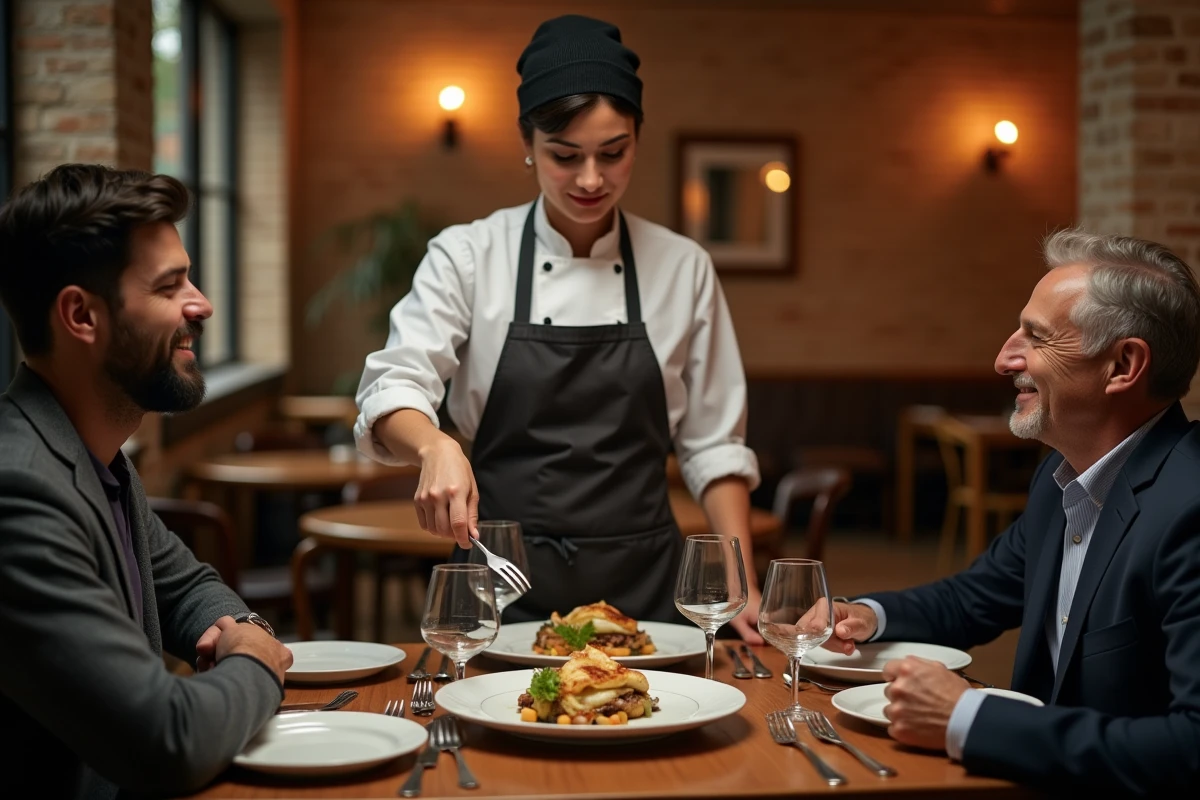
Several chefs assert in recent interviews: the most striking compliment is not a phrase, but a concrete behavior. Coming back specifically for a dish, ordering the same dish at every visit, or finally saying “I’ll have what the chef recommends” are signals of professional trust that are hard to match with words.
You can also act after the meal. Leaving a detailed online review, recommending the restaurant to friends, sharing a photo of the dish while mentioning the chef’s name: these actions extend the compliment well beyond the table. Chefs emphasize that this type of concrete support weighs more on their business than an oral compliment, even a sincere one.
The right moment to speak to the chef
At the end of service, when the pressure eases, a direct word to the chef has more impact than a message relayed by the server. If the chef comes out into the dining area, it’s an invitation. There’s no need to prepare a speech: a short, precise sentence is enough.
Some gestures that speak volumes in a restaurant context:
- Ordering a dish a second time during the same meal, which chefs consider one of the most genuine compliments
- Asking for the chef’s suggestion menu rather than choosing for oneself, a sign of professional trust
- Writing an online review that mentions a specific dish or technique, not just the ambiance or service
- Offering a local artisanal product (oil, spice, condiment) that the chef could incorporate into their cooking
Valuing teamwork and management in the kitchen
Since the media coverage of burnout in the restaurant industry (notably after the health crisis and testimonials from starred chefs between 2022 and 2024), recognition has changed its scope. A compliment on the cohesion of the kitchen team has become as valuable as praise for the plating.
Saying “you can tell your team is united” or “you seem respectful with your teams” touches a sensitive point. Work in the kitchen relies on a collective under pressure, and many chefs invest as much energy in management as in culinary creation. Recognizing this effort is to see the profession in its entirety.
What the chef rarely hears
Compliments about the place, the ambiance, the pace of service, or the consistency of a dish from one visit to another are infrequent. The chef mainly receives feedback on taste. Mentioning the consistency of quality, the fluidity of service, or the attention given to the well-being of the brigade goes beyond the usual scope and makes a greater impact.

Compliments to avoid: what sounds insincere to a professional chef
Some formulations, even well-intentioned, fall flat. Vague superlatives like “best meal of my life” or “you are a genius” create discomfort rather than pride, as they say nothing about the dish itself. The chef has no professional use for them.
Comparing one chef to another, even to place one above the other, is rarely well received. Saying “it’s better than at X” puts the chef in a competition they did not ask for. Similarly, references to cooking reality shows (“it feels like Top Chef”) trivialize a daily job that is anything but a spectacle.
What works better:
- Name the dish and the specific element that stood out (an ingredient, a texture, a seasoning)
- Keep it simple: a technical sentence is better than a lyrical paragraph
- Address the chef as a craftsman, not as a celebrity
Feedback varies on this point depending on the context (fine dining restaurant, bistro, home cooking), but the precision of the compliment remains the common denominator regardless of the setting. A chef who receives technical feedback knows exactly what worked and can reproduce it, refine it, or highlight it. This is the most operational form of recognition that exists in this profession.