
A student no longer waves their notebook, but their tablet. A simple gesture, and geometry bursts forth on all screens: colorful shapes, vibrant animations, captivated gazes. The whispering fades away, replaced by collective curiosity. Learning has changed its setting, and the blackboard is overshadowed by the blue light of screens.
Between enthusiasm and caution, educational applications are upending the benchmarks. Some promise miracles, while others truly deliver: accelerated memorization, unleashed creativity, remote collaboration. But how to spot the rare gem among the multitude of digital tools? Classrooms are evolving, sometimes faster than a wifi connection.
Digital in schools: promises and challenges of connected education
The massive arrival of educational technology in schools is no mere gadget. Virtual classes, real-time exchanges, renewed educational resources: teaching no longer resembles that of yesterday. Now, teachers orchestrate educational continuity thanks to a range of digital services to maintain contact, even beyond the walls of the school.
Facilitated access to knowledge is appealing, but the road remains fraught with obstacles. The Ministry of National Education is multiplying initiatives to support the training and guidance of teachers in digital technology. Yet, disparities in computer skills persist and sometimes widen the gap between political ambitions and on-the-ground reality. The generalization of digital workspaces, or the arrival of artificial intelligence, generates as much enthusiasm as doubt in teachers’ lounges.
In daily life, applications like Flashcardlet find their place in school. Praised for its simplicity and ability to personalize learning paths, it embodies this new generation of educational apps that transform student motivation. The Digital Education Directorate encourages these experiments but reminds that the thoughtful integration of information and communication technologies remains a collective project, never truly finished.
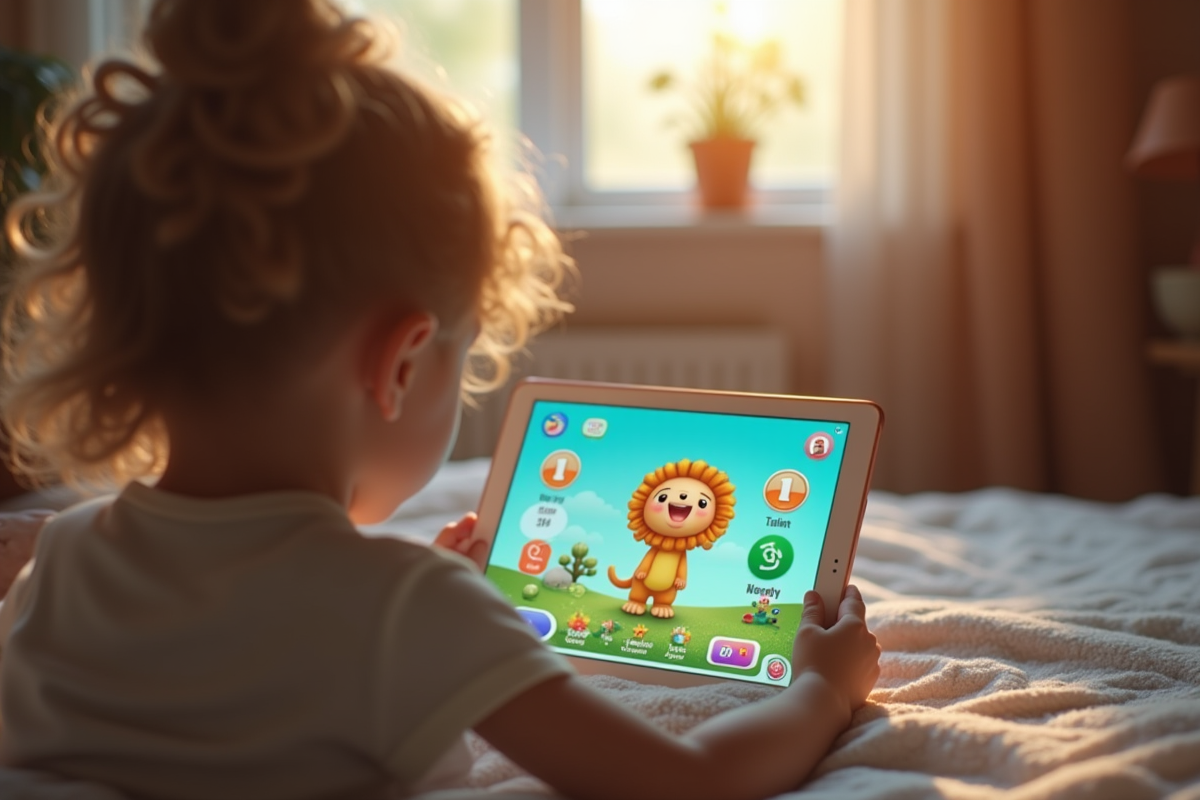
Which applications truly transform daily learning?
In recent years, educational applications have revolutionized how students acquire knowledge. Through these platforms, the connected classroom takes shape: everyone accesses tailored, evolving content designed for their pace. Gone is the simple transition from paper to screen; welcome to an active pedagogy, where autonomy and participation are no longer hollow words.
Through various experiments, some apps stand out: modular exercises, memory stimulation, diverse assessment… Flashcardlet, for instance, captivates with its direct usability and customized features: card editing, sharing among students, precise tracking of progress. For teachers, it’s a new asset to measure individual engagement, vary methods, and broaden the pedagogical possibilities.
- Personalized and adaptive learning paths
- Accessibility from any connected device
- Collaboration and exchanges among students in real-time
The integration of these digital tools also shakes up teachers’ habits, sharpening their techno-pedagogical skills. Students, in turn, gain autonomy and discover more playful, vibrant ways of learning. Digital education no longer merely replaces materials: it becomes an experience, a testing ground, where each click can pave the way to new knowledge.
Tomorrow, a raised hand may no longer signify a question, but an idea, a project, a shared challenge for the whole class – technology as a banner, imagination as the engine. The blackboard fades away, but learning continues to reinvent itself.