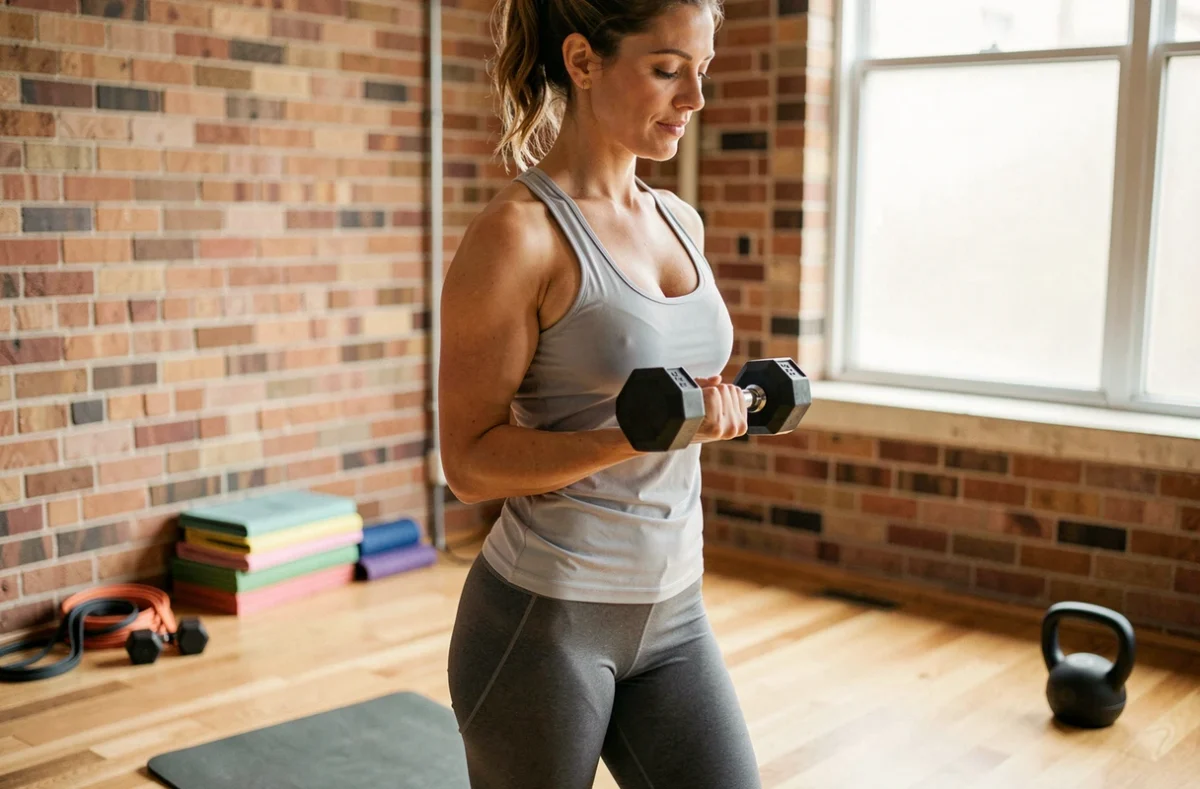
A home fitness equipment is defined by its ability to impose a progressive load on the body, whether mechanical (free weights, resistance bands) or cardiovascular (motorized or resistance machines). The choice relies less on the popularity of a machine than on three concrete parameters: the available space, the type of muscle engagement sought, and the actual lifespan of the equipment.
Repairability and software support duration of connected devices
Competing guides compare machines by sports objectives. They overlook a criterion that weighs on the budget in the medium term: software sustainability.
A connected bike or treadmill operates with an app that manages programs, performance tracking, and sometimes resistance adjustment. If the publisher stops support, the device loses some of its functions, even if the motor still runs.
The European directive 2024/825, analyzed by the Kohen Avocats firm in September 2026, regulates misleading claims related to product durability. This directive pushes manufacturers to clarify the duration for which they guarantee updates.
Before purchasing a connected device, three points must be checked: the announced support duration for the app, the availability of spare parts, and the operation of the machine without an active subscription. A treadmill that becomes a simple motorized incline without its app represents an initial cost that is hard to justify. The catalogs found on fiteo.fr allow for comparing technical specifications before making a decision.
Strength equipment or cardio machine: where to invest first
Most guides spontaneously point towards a treadmill, an exercise bike, or an elliptical. An analysis published by Epignosis Insights in September 2026 notes that uses are shifting towards simple strength equipment (dumbbells, kettlebells, resistance bands) rather than just cardio machines.
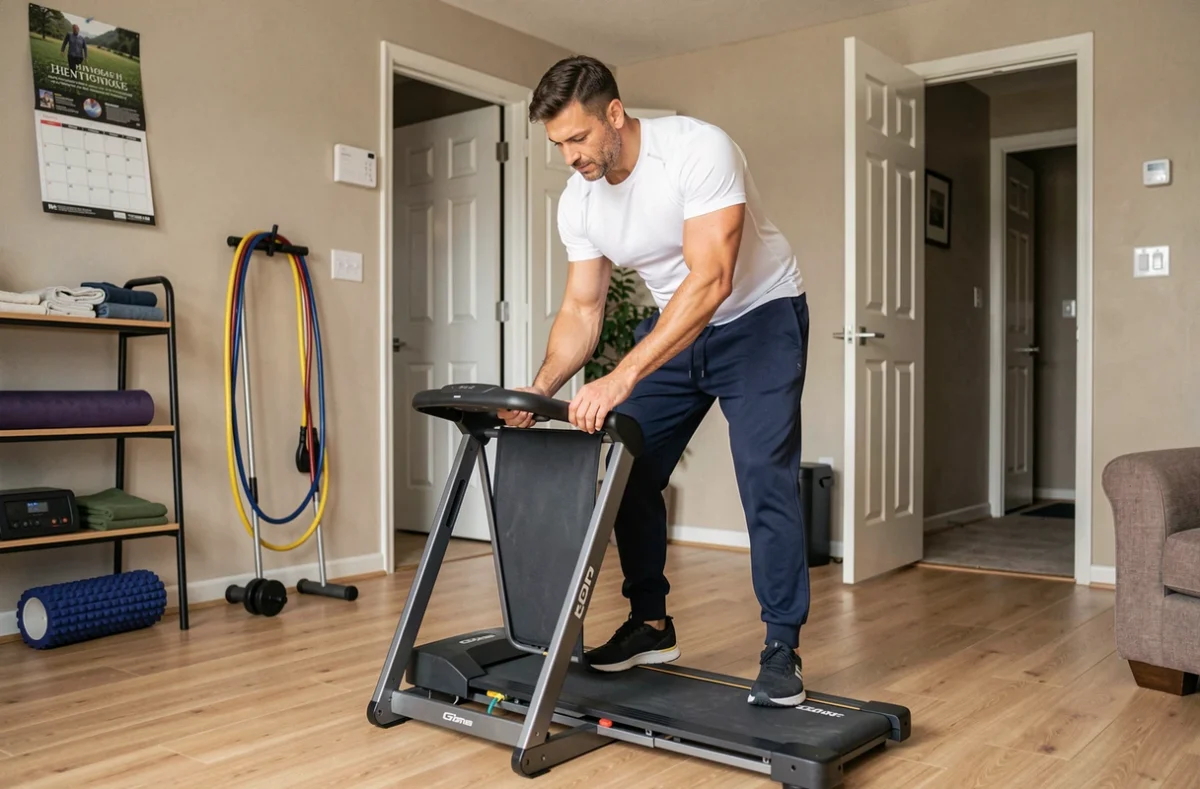
This trend has a practical explanation. A set of adjustable dumbbells and a flat bench occupy less than one square meter on the floor. They allow for working the entire body with a progressive load. In contrast, a treadmill requires a clear length, a safety clearance behind the machine, and a nearby power outlet.
When cardio remains the right choice
Strength training does not cover all needs. For a pure endurance goal, low-impact rehabilitation, or preparation for a running event, a cardio machine remains relevant. The rowing machine stands out for its ability to engage a large number of muscle groups in a single movement, making it a compromise between cardio and strength.
- Endurance or weight loss goal through training volume: treadmill or spinning bike, provided there is sufficient floor space.
- Overall strength goal with reduced footprint: adjustable dumbbells, elastic bands, and wall-mounted pull-up bar.
- Mixed cardio and strength goal: rowing machine, which works legs, back, and arms in a continuous motion.
The best first investment depends on the volume of space, not the expected volume of sweat.
Monitoring and support: the underestimated factor of the home gym
Buying equipment does not guarantee consistency. A summary published by Gaugius in September 2026 highlights that guidance often matters more than the sophistication of the device. A progressive program, technical feedback on movements, or a simple session reminder increases the chances of maintaining training over several months.
Some connected devices integrate video coaching or adaptive training plans. Others are limited to a calorie counter. The difference between the two is felt in long-term adherence. Before comparing watts or maximum speed, it is better to examine the quality of the support program provided.
Integrated programs or external coaching
Two options are available. The first: a device with a subscription that offers guided sessions (like an integrated screen or companion app). The second: a simple mechanical equipment paired with external support, whether from a coach via video or a third-party programming app.
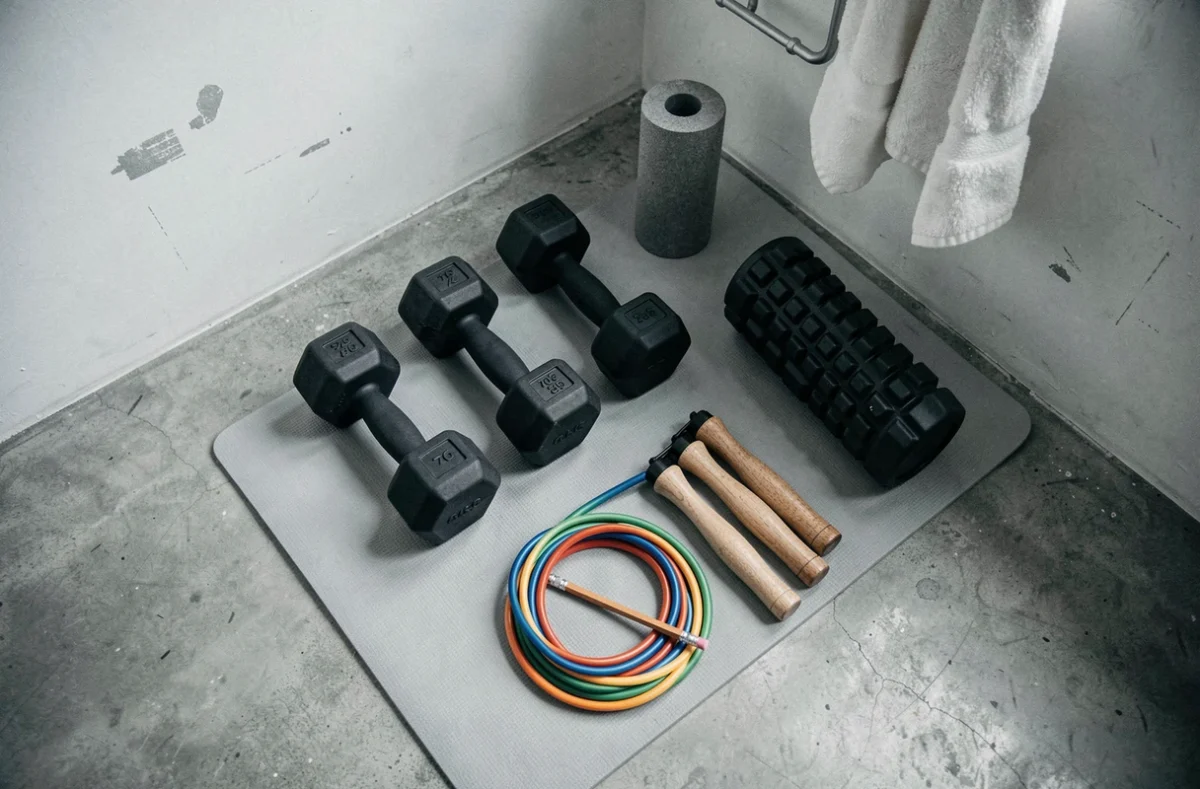
The mechanical option plus external coaching offers a durability advantage. If the device’s app shuts down, the equipment remains fully functional. A bench, a bar, and weights do not suffer from software obsolescence.
Floor space and apartment constraints: concrete selection criteria
Space dictates the choice more than sporting ambition. In an apartment, three constraints must be considered before any order:
- The free floor space, accounting for the necessary clearance around the device for movements (a rowing machine requires the length of the rail plus one meter in front and behind).
- The capacity of the floor, especially on upper floors: a rack loaded with weights concentrates a significant weight on a small area.
- The noise transmitted to neighbors: a motorized treadmill generates vibrations that a simple floor mat does not always absorb.
A classic exercise bike remains the most compact cardio device. Some foldable models can be stored in a closet. For strength training, an adjustable dumbbell kit replaces ten pairs of fixed weights, significantly reducing the floor footprint.
Measuring the room before consulting a catalog avoids returns and equipment that ends up as a coat rack. The most costly choice at home is not the overly expensive equipment, but the equipment unsuitable for the space that will never be used.