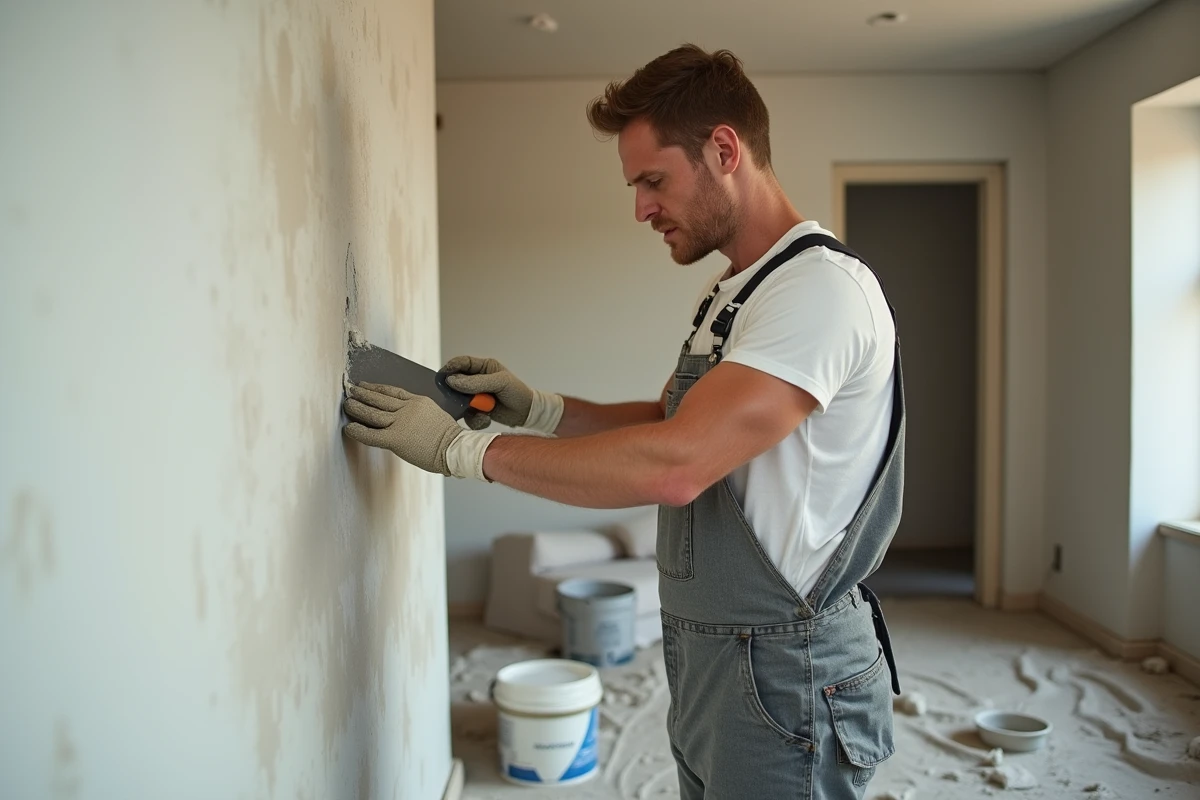
A coating that can be scraped off the next day still surprises some seasoned craftsmen. However, the formulation of certain accelerated one-coat products challenges traditional practices, provided that no parameter is left to chance. Weather monitored, flawless substrate, choice of the right product: nothing is left to improvisation. The promise of saving valuable time is appealing, but rushing can lead to the appearance of cracks or stubborn marks. Success relies less on speed and more on the attention given to each phase of the project.
To successfully carry out this delicate operation, one must rely on wise technical choices, anticipate each step, and invest in the right tools. A few targeted tips are enough to avoid classic pitfalls and ensure a flawless facade, without any touch-ups.
Scraping a coating the next day: is it really possible?
The one-coat product has proven appealing due to the speed it promises. Scraping a coating the next day is no longer a legend, but a concrete option as long as certain criteria are met. Neither drying nor setting can be decreed: they must be observed, monitored, and experienced. Exposure, weather, the nature of the substrate, every detail matters in identifying the perfect window. Scrape too early and the coating will tear off; too late and it will crumble under pressure.
To hit the mark, focus on formulations designed for quick scraping. Avoid temperature extremes: no frost, no scorching heat. Monitor the plastic phase, that moment when the surface leaves a mark under your finger without sticking to the tool. Forget automatic timers: the right moment is read on the material itself. Professionals know well: the hand and the eye are the law, not technical data sheets.
On-site, successfully scraping the next day requires serious organization. To delve into each step, from product selection to finishing, the tips for scraping a coating the next day provide a detailed guide. Knowing when to aim for the right moment gives your facade long-lasting durability and a consistently successful finish. Nothing replaces practice or careful reading of the signs given by the coating.
Before diving in, it’s better to rely on observable criteria. Here are some reference points to examine to decide if scraping can begin:
| Criterion | Observation to make |
|---|---|
| Surface appearance | Slightly matte, no shine |
| Touch | Soft, non-sticky, leaves a mark under pressure |
| Weather | No rain, stable temperature |
Early scraping tolerates neither approximation nor slackness. It becomes a real solution when carried out with rigor and know-how.
Essential precautions to avoid unpleasant surprises
Diving into scraping the next day does not allow for improvisation. From the preparation stage, check the quality of the substrate: if it is poorly prepared, the coating adheres poorly, especially when speeding up the steps. Any trace of dust, moisture, or dirt can disrupt the product’s setting.
Observe the weather before applying the coating. Too humid air, a risk of rain, or extreme temperatures can alter the behavior of the material, making the operation impossible. Ideally, work between 8°C and 25°C for a gradual setting and balanced drying.
Monitor the evolution of the coating. Touch the surface: it should remain soft, mark under pressure, without sticking. This stage ensures a consistent finish. If you scrape too early, the coating will peel off and leave irregularities; too late, it becomes hard and difficult to work with, compromising the final appearance.
Before starting, review these key points:
- Perfectly clean, healthy, and slightly damp substrate
- Stable weather conditions, without rain or strong wind
- Regular observation to detect the right plastic stage
- Specific tools in perfect condition: trowel, scraper, soft brush
The uniform application of the coating is crucial. A consistent thickness across the entire facade limits dry or overly wet areas, which complicate finishing. Pay particular attention to wall bases and window frames, which are often more exposed to moisture. Adjust your method to what the project reveals, not to a fixed schedule.

Practical tips for stress-free scraping
The operation requires method and precision. Only intervene when the coating reaches its ideal texture: neither too soft nor too hard. To check, press lightly with your finger: the mark should remain clear, without the material sticking. It is this precise moment that determines the quality of the result.
Prepare your tools. A trowel with a pointed edge is invaluable for corners without tearing the coating; a wider scraper ensures consistency over large surfaces. Always use clean and well-sharpened tools to limit defects and guarantee a uniform grain.
For a smooth execution, proceed step by step:
- Work area by area, from top to bottom, to control your movement and ensure a consistent finish.
- Limit repeated passes: insisting weakens the coating layer and alters the appearance.
- After each square meter, brush the surface to reveal the grain and facilitate visual control.
Scraping at the right moment optimizes the facade’s resistance, protects it durably from the elements, and improves its insulation. A mastered gesture, attention to every detail, and your wall will display a flawless finish without surprises. Every step weighs in the final success: the facade will speak volumes about the quality of your work.