Lily pollen stains textiles, tablecloths, and light surfaces within seconds of contact. Removing the stamens (more precisely, the pollen-bearing anthers) before the flower fully opens affects the bouquet’s lifespan, the cleanliness of the room, and even indoor air quality. What parameters actually change when these organs are removed, and which are merely decorative myths?
Lily Pollen and Indoor Surfaces: What Professionals Measure
The orange powder released by the lily’s stamens is not an ordinary pigment. It contains lipids that bind the color to textile fibers upon contact with moisture or heat. A simple rub on a light fabric is enough to create a nearly permanent stain if not treated immediately.
Several international hotel chains, including Marriott International, have incorporated into their internal floral decoration guidelines the requirement to remove the stamens from lilies in rooms and suites. The reason: a notable volume of customer complaints about stains on linens and clothing, documented in their quality reports between 2021 and 2023.
High-end florists follow the same logic. Since 2022-2023, many workshops offer “stamen-free lilies” (stamens removed in the workshop) for decorations in venues with light surfaces. This service is charged as a premium option, associated with a zero stain and zero pollen dust guarantee, according to the Floral Trends Forecast 2024 report from the International Florists Association.
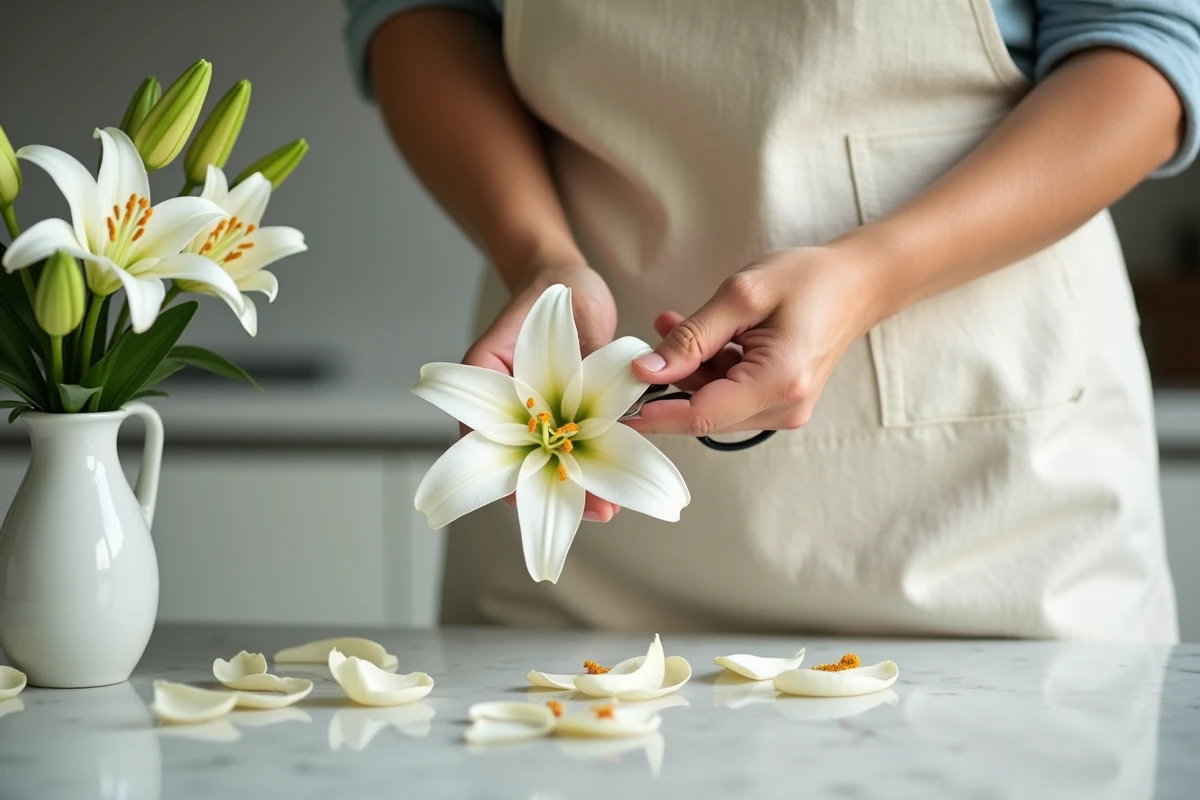
To learn everything about lily stamens and the precise removal technique, the method remains simple: pinch each stamen at the base as soon as the bud starts to open, before the pollen becomes powdery.
| Parameter | Stamens Kept | Stamens Removed |
|---|---|---|
| Risk of Stains on Textiles | High once fully opened | Almost none |
| Vase Lifespan | Standard | Extended by several days |
| Pollen Suspended in Air | Present, allergenic | Removed |
| Aesthetic of the Flower | Natural look with anthers | Simplified corolla, petals without marks |
| Photo Retouching Needed (shoots) | Frequent (marks on white petals) | Significantly reduced |
Lily Vase Lifespan: The Real Role of Removing Stamens
Removing the stamens is not just about cleanliness. The cut flower dedicates part of its energy to maturing the pollen and, potentially, to fertilization. By removing the male reproductive organs, this process is interrupted.
The plant then redirects its resources toward maintaining the petals and stems. Feedback from professional florists, particularly on specialized forums, indicates that the freshness of the bouquet can be extended by several days thanks to this simple action, combined with regular water changes in the vase.
The timing of the removal matters. It should be done as soon as the bud opens, when the anthers are still slightly moist and sticky. At this stage, the pollen has not yet dispersed. Waiting for the flower to fully bloom increases the risk of dispersion onto the white petals, which dulls the visual appeal of the bouquet.
Additional Conditions for Optimal Maintenance
- Cut the stems at an angle before placing them in the vase to maximize water absorption by the lily stem
- Place the bouquet away from direct heat sources and fruits (ethylene accelerates wilting of cut flowers)
- Change the water every two days and clean the vase to limit bacterial proliferation, the primary factor in degradation
- Remove submerged leaves, which ferment and cloud the water quickly
Lily Pollen Allergies Indoors: An Underestimated Health Criterion
The allergic dimension is rarely mentioned in floral decoration guides. Lily pollen, dispersed in fine particles in an enclosed space, can cause respiratory irritations and reactions in sensitive individuals.
The Finnish Allergy Association updated its recommendations on cut flowers indoors in 2023. It explicitly advocates the removal of lily stamens in public places, not only to avoid stains but also to limit allergic reactions to pollen in enclosed spaces.
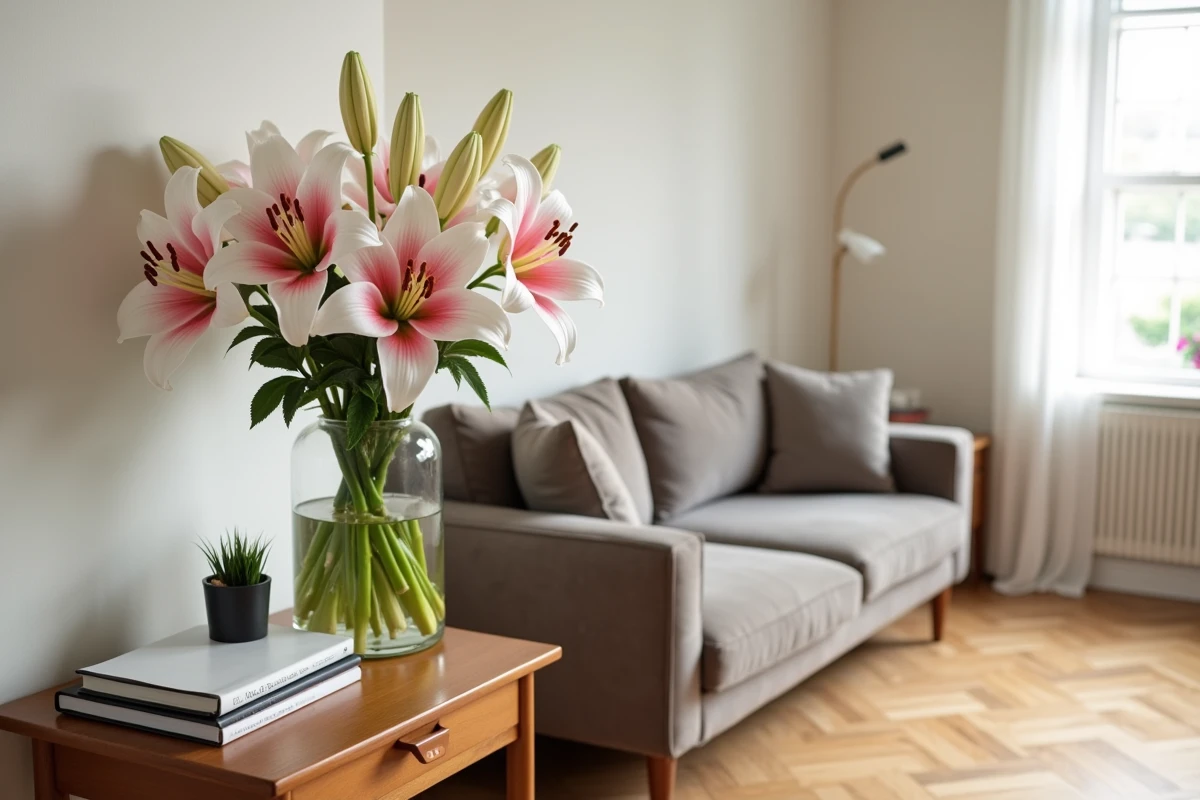
This approach is becoming common in other Nordic countries, where professional guidelines now incorporate this health criterion for hotels, offices, and reception areas. For interior decoration intended for homes with young children or asthmatic individuals, the systematic removal of stamens becomes a relevant reflex beyond mere aesthetic considerations.
Stamen-Free Lilies in Event Decoration: The New Standard for Professionals
Decorators specializing in photo shoots and advertising filming have adopted immediate stamen removal as a standard practice. The reason is pragmatic: removing the stamens reduces the need for digital retouching on images, especially when white lilies appear in the foreground.
On white oriental varieties, a single open anther can deposit pollen on several adjacent petals within hours. Cleaning these marks in post-production represents a cost and labor time that studios prefer to avoid at the source.
Lily Varieties and Pollen Quantity
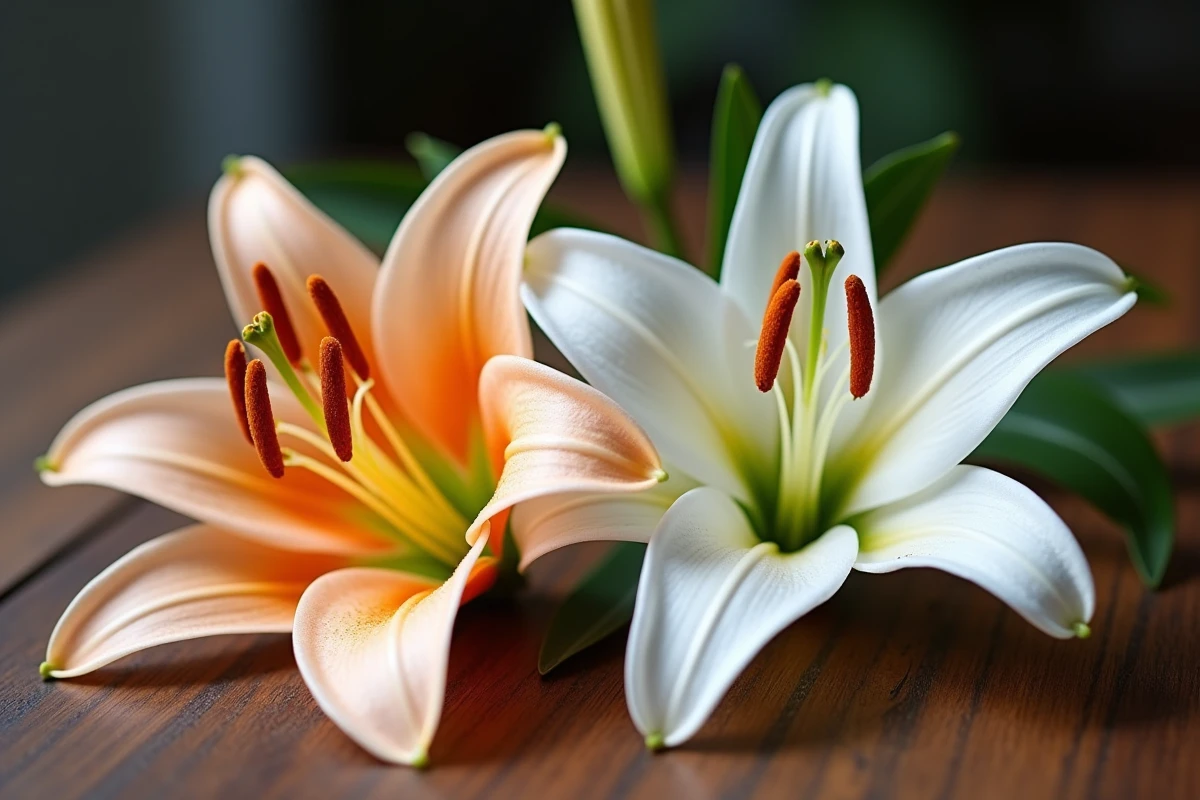
Not all varieties produce the same amount of pollen. Asian lilies generally release less pollen than oriental lilies, whose strong fragrance is accompanied by particularly heavy anthers. For interior decoration in a small space, Asian varieties present a lower risk, even without stamen removal.
In contrast, white oriental lilies, prized for their fragrance and large corollas, require systematic stamen removal if the goal is to preserve light textile surfaces nearby.
The act of removing the stamens from a lily takes just a few seconds per flower. Data from the hospitality industry, professional photography, and allergology converge on the same conclusion: this action modifies the lifespan, cleanliness, and health compatibility of the bouquet. For a striking interior decoration, it offers the most favorable effort-to-result ratio that a bouquet of lilies can provide.